Categories
Announcement Events News and Events

Tech Tools for Life Goes Hands-On in 2026!

By Arlene Lugo, Program Director, CT Tech Act Project

As the seasons shift, the echoes of our 2025 Tech Tools for Life Conference still reverberate with excitement. As we enter the peak of the holiday season, it’s never too late to share the triumphs of our 2025 event while unveiling exciting plans for 2026!

How good was it?
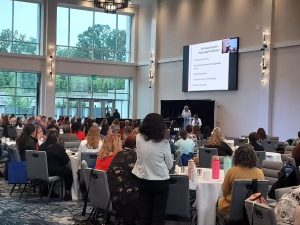
Kara and Alice Brouhard give Keynote Address on Day 2

Our two-day Assistive Technology conference, held on June 9th and 10th at the Bristol Event Center, was a great success with an overwhelmingly positive response! We had almost 250 attendees daily and a wide array of 30 exhibitor tables and 15 dynamic breakout sessions each day.
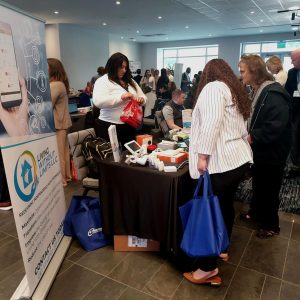
2025 Tech Tools for Life Conference Exhibit hall with attendees visiting the Living without Limits table.

Our keynote speakers, Lynne Seagle on Day 1 and Kara and Alice Brouhard on Day 2 delivered moving insights that left attendees inspired and invigorated.


The Survey Says…
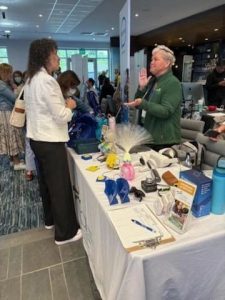
Visiting with UCP of Eastern CT’s exhibitor table.

Our Conference post-survey revealed a clear theme: attendees want more dedicated time for hands-on engagement with the AT devices and more interactive sessions.

About the Sessions:

“All sessions I attended were great! At times wish I could have been in 2 rooms at once.

Kudos for Keynotes:

“The keynote speaker was absolutely amazing!”

“Kara shared her story and a great real-life example of AT in practice.”

From an Exhibitor:

“My overall experience was top-notch.”

Favorite Sessions:

“I loved them all. Can’t possibly choose just one.”

You spoke – we listened!

As a result of the feedback we received, we have been working hard to establish the 2026 Tech Tools for Life, Assistive Tech at its Best: Hands-On Series.

Rather than a full two-day conference in 2026, we are planning a series of hands-on sessions across the state. You can tailor your AT learning experience by choosing sessions that interest you most and will give you the opportunity to engage directly with the latest in Assistive Technology. Dive into topics like Cooking with AT, DIY/Make & Take, Smart Home innovations, Accessible Gaming, Wearable Tech, Cutting-Edge Artificial Intelligence, and more. The Hands-on Series will begin in February 2026 and will run to the end of next year.

More information and details will be hitting your inbox soon. In the meantime, you can visit www.TechToolsforLife.org to find updates on the calendar for the Hands on Series for 2026, including location, registration links, payment information and more.
Tech Tools for Life Assistive Tech at its Best Hands On Series 2026 logo

For a Taste of What’s to Come

The Hands-On Series will kick off on February 12, 2026, from 10am – 2pm with our first session: Hands on… Aprons On: Cooking Without Limits presented by Living without LimitsThis session will accommodate up to 50 attendees who will be cooking with the use of Assistive Technology devices and will be able to enjoy the food as they make it. A modest registration fee of $25 per person will be charged. More info to come soon!

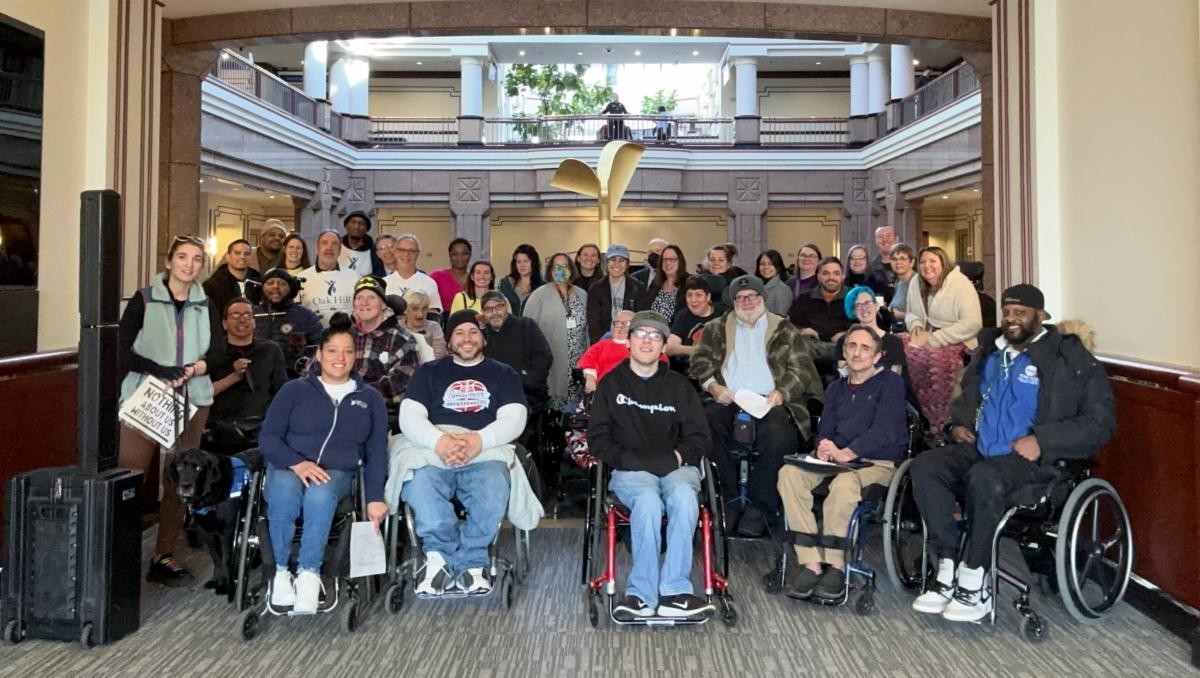
Nigel and James from Living without Limits are Cooking with AT.
Categories
Announcement AT Devices News and Events Resource

Connecticut Wheelchair Reform Coalition

Greetings! My name is Corey Lee, and I represent the CT Wheelchair Reform Coalition. We are a group of disability advocates in Connecticut fighting for the timeliness of wheelchair repairs, especially those that need to take place in one’s home. This is a national issue, with average wait times for such repairs ranging from 60 to 90 calendar days in 2024. Last year, Governor Ned Lamont signed law PA 24-58, which went into effect on July 1, 2024. Through hard work and powerful advocacy from members in the wheelchair community, this historic piece of legislation was the first of its kind requiring wheelchair repair companies to service someone’s wheelchair within 10 business days. This piece of legislation was passed unanimously through both chambers of Connecticut’s General Assembly. However, this fight is far from over, and there is still much more that needs to be done.

Today, we are fighting for additional legislation that primarily

1.   expands the repair services insurance must pay for, such as preventative maintenance,

2.   penalizes companies that are flouting the new law and misleading customers, and

3.   requires companies to inform their customers of their rights under the law. We’re looking for others to share their stories of wheelchair repairs to help galvanize this coalition’s mission, as we work to negotiate reforms to improve the quality and timeliness of wheelchair repairs in CT, but also serve as a continuing model for other state and national policies.

 Tell us your story:

You can contact us with your story at wcrepairct@gmail.com or (860) 470-6514.

A wheelchair is more than a piece of complex rehabilitation equipment; it’s a person’s ability to be mobile, which gives them access to being a part of their community. No one should go without their mobility device because it wasn’t fixed on time, and now is the time to fix this problem. We also know that comprehensive and long-lasting reforms to wheelchair access and repair policies can only happen in the context of broader and deeper healthcare reform that benefits all, because disability does not discriminate. With that in mind, we look forward to exploring opportunities to collaborate and show solidarity with other causes.

If you want to join our cause contact us at the email above or

fill our form to sign up for future meetings!

To Report a Wheelchair Repair Issue:

Report to CT Healthcare Advocate:

bit.ly/reportwheelchairdelaysct

866-466-4446

Healthcare.advocate@ct.gov

Categories
Announcement News and Events Smart Home Tech

First-of-its-Kind Smart House Showroom & Assessment Center Opens

By Pam Fields, CEO of ARC and Living Without Limits

Connecticut has launched a groundbreaking new resource for assistive technology: the Living Without Limits Smart House Showroom and Assessment Center in Meriden. Opening its doors in October 2025, this fully functioning house represents the first facility of its kind in the state, offering a hands-on environment where individuals can explore, test, and experience assistive technologies before making purchasing decisions.

Pam Fields addressing attendees at the Ribbon Cutting Ceremony

Operated by Living Without Limits at MidState Arc, Inc in collaboration with the CT Tech Act Project, the Department of Aging and Disabilities, and the Department of Developmental Services, the Center serves all populations including individuals with intellectual and developmental disabilities, traumatic brain injury, aging-related needs, veterans, autism, mental health conditions and anyone with barriers to independent living. The showroom features a comprehensive array of technologies including lift systems, smart showers, smart ovens, stove, and microwave safety devices, cooking aids, remote support systems, employment assistance, and medication management tools. Visitors can tour the center to see these technologies in real-world settings, while assessors from across Connecticut can conduct evaluations in this accessible environment.

A key feature of the center is its extensive lending library, allowing people to borrow devices and try them in their own homes before committing to a purchase. This try-before-you-buy approach removes barriers to accessing appropriate assistive technology and ensures individuals find solutions that truly meet their needs. The center was made possible through funding from the Governor’s Non-Profit Grant Program, the Department of Developmental Services, The CT Tech Act, the City of Meriden, and various grants and foundations. Connecticut residents interested in scheduling a tour or assessment can visit livingwithoutlimits.org and complete a request form. This innovative facility represents a significant step forward in making assistive technology accessible and user-friendly for all Connecticut residents seeking to live more independently!


Categories
AT Success Stories News and Events Product Spotlight

How AI Glasses Gave a CT Photographer His Independence Back


Reprinted from WHSU Public Radio By Jeniece Roman, WSHU, Photos: Jeniece Roman / WSHU

After a long career as a photographer, a Connecticut man had to come to terms with the gradual loss of his eyesight. However, with the help of new technology, he’s reconnecting with the world.

Jack McConnell has been a commercial photographer for over 50 years. McConnell was diagnosed with diabetic retinopathy, an eye disease caused by diabetes that brings gradual vision loss. Now he’s completely blind in one eye and can only see dark shapes and light in the other.

“A year ago, I could see the trees across the way, with their incredible branches and leaves and green dancing to the breeze of a springtime day. Not anymore. It’s black. It’s dark gray. There’s nothing there,” McConnell said.

Before his condition, McConnell traveled the world to meet interesting people and embedded himself in different communities. From traveling on a container ship in the North Sea to taking photographs of locals on an island off the coast of Maine, McConnell has taken roughly 250,000 images throughout his career. He said the shift has been a difficult change in his life.

“When something happens, you either fight it or you deal with it. And I’ve had to learn to deal with it,” McConnell said.

Then, a friend of McConnell recommended he visit UCP of Eastern Connecticut, a nonprofit center that provides programs for people with disabilities. Patients are then matched with programs and services based on various factors. The center has a lending library where people can rent assistive technology to try before purchasing.

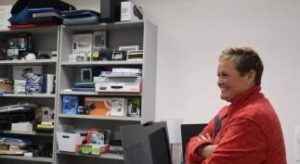
Shannon from UCP of Eastern Connecticut stands in front of the device lending library with a smile.
Shannon Taber with the UCP of Eastern Connecticut.
Shannon Taber is the director of Inclusion and Accessibility. Taber trained McConnell on how to use Meta AI glasses, a new technology from Ray-Ban and Meta, makers of Facebook. The glasses combine voice commands with artificial intelligence. Although they look like a normal pair of sunglasses, the Meta glasses have cameras that can take photos, scan the area in front of them, and even speak to them through built-in speakers near the ears. The glasses can identify items like food menus, money and medication labels.

“Jack said, ‘I really like these. Can I keep these for a while?’ And so we did a four-week loan with the Meta glasses. Jack liked them. Found some significant independence with those,” Taber said.

McConnell previously tried ORCam technology, but he preferred the Meta glasses. Compared to the nearly $4,000 price tag, the $400 Meta frames were more affordable. Funding is a huge hurdle for the center. Taber said the center does a lot of grant writing and is always looking for new partnerships. The center purchased the glasses through special funding from the Connecticut Tech Act.

“This is a population that is always underserved and always underfunded. They usually live on a very limited, very tight income, very constrained, and we get requests on a daily basis for assistance,” Taber said. “I would say the greater majority of the time, assistive technology is not within their budget. So for us, we have to find ways. To fund it for them.”

Jack at the farmers market using his Meta glasses.
Jack is at the farmers market using his Meta glasses.

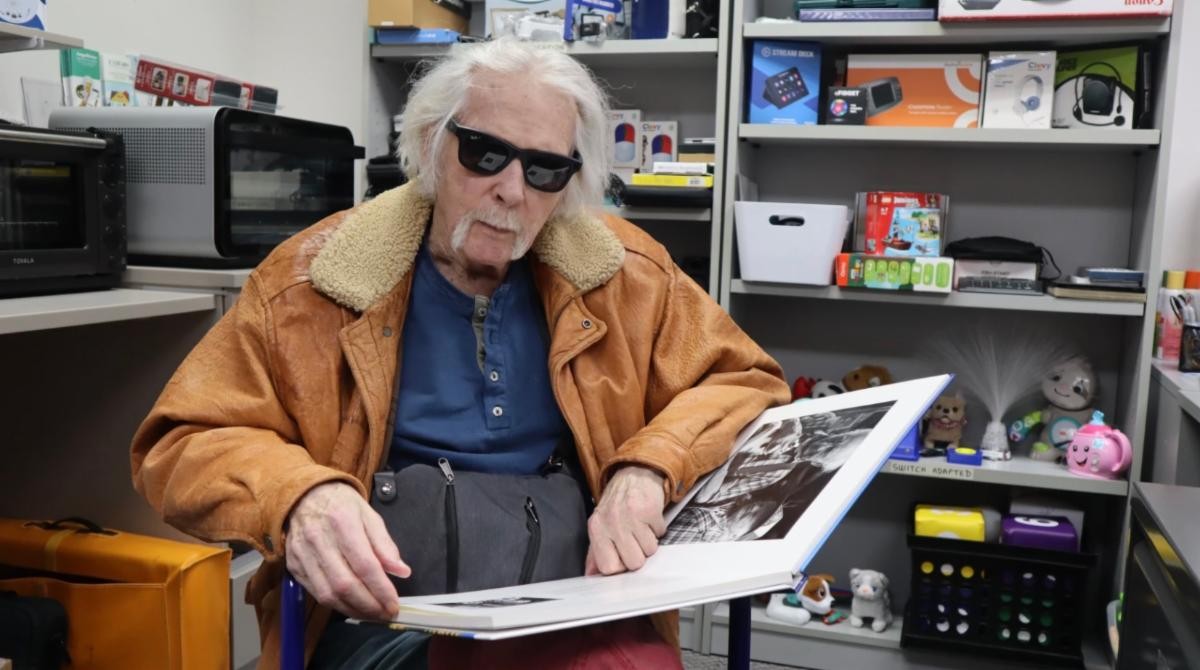
On a visit to the center, McConnell met with Taber to test out a few more features. With the command “Hey, Meta,” McConnell can ask the glasses to take a photo or describe what’s in front of him. McConnell sat down with a book of his photography. He asked the glasses to describe the picture in front of him. From the description, McConnell recognizes the subject of the photo and begins to tell a story about the encounter. Now, he can ‘see’ his photography with the help of the glasses.

McConnell said the glasses have allowed him to get back to daily life, from reading a menu at restaurants to grocery shopping and meeting up for coffee with friends. He said the glasses have significantly opened up his environment and that he looks forward to using them more.

“I now have the glasses, and they do help me see where I am when I go out. I’m really looking forward to going out a lot more and getting out of the house, getting into the world and dealing with it with the help of Meta,” McConnell said. “I know that’s going to make a big difference for me.”

McConnell said with his renewed confidence, he’s less isolated and feels like he’s part of the world again. He may even start taking photos again.


Categories
News and Events Product Spotlight

Tech Tool Spotlight: Meta Glasses – Live AI

Reprinted from the NEAT Newsletter, Dec. 2025 assistivetechnology.oakhillct.org

Here’s how it works:

To start a session, say “Hey, Meta, start Live AI.”

Once the session begins, you don’t need to say “Hey Meta” again during that session. To Pause, say “Pause Live AI” or tap the touchpad. To resume, say “Hey Meta, resume Live AI” of tap the touchpad again. To stop a session, say “Stop Live AI” or tap and hold the touchpad.

Blindness / Low Vision

  • A student with low vision entering a cafeteria can ask the glasses, “What does this menu say?” and hear the options.
  • While walking across campus, the glasses can alert the user to stairs, doors, or uneven surfaces.

Hearing

  • During a lecture, the glasses can display live captions so the user can follow along without a sign language interpreter.
  • The glasses can flash a light on the lens when a fire alarm goes off.

Mobility

  • In a large office or hospital, the glasses can guide the user to the exact room without relying on a phone or map.

Cognitive or Learning

A person with memory challenges cooking a meal can receive real-time instructions, such as “Next, chop the onions.”