Categories
Announcement AT Devices News and Events Resource

Connecticut Wheelchair Reform Coalition

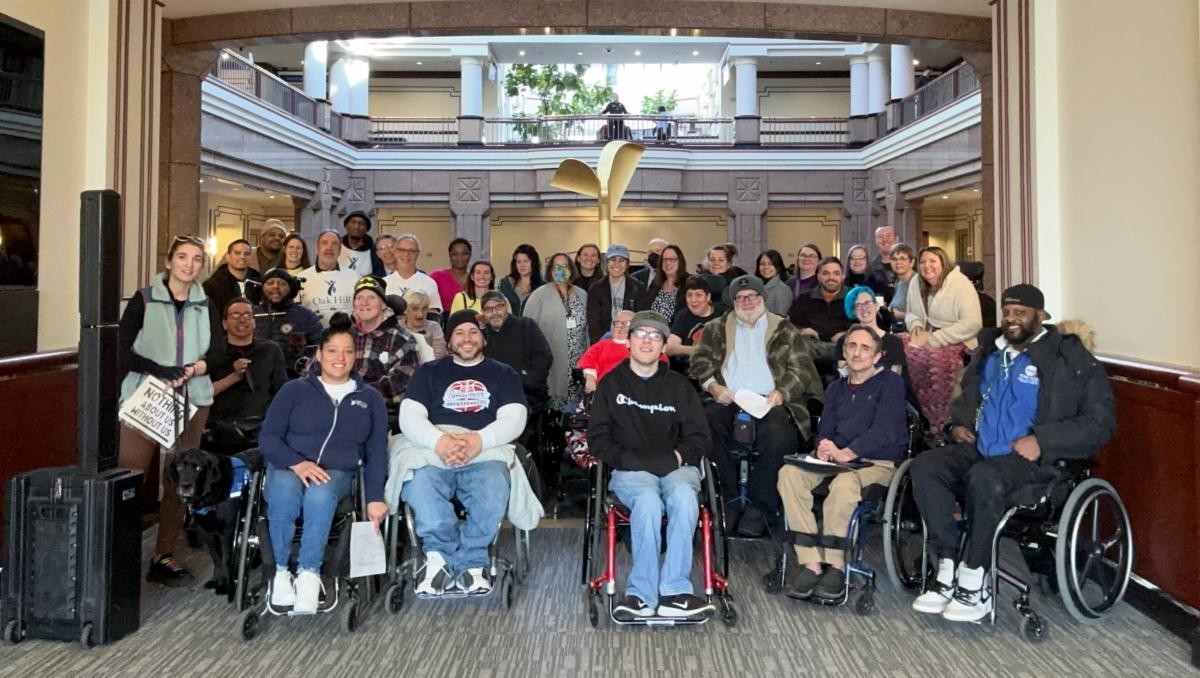
Greetings! My name is Corey Lee, and I represent the CT Wheelchair Reform Coalition. We are a group of disability advocates in Connecticut fighting for the timeliness of wheelchair repairs, especially those that need to take place in one’s home. This is a national issue, with average wait times for such repairs ranging from 60 to 90 calendar days in 2024. Last year, Governor Ned Lamont signed law PA 24-58, which went into effect on July 1, 2024. Through hard work and powerful advocacy from members in the wheelchair community, this historic piece of legislation was the first of its kind requiring wheelchair repair companies to service someone’s wheelchair within 10 business days. This piece of legislation was passed unanimously through both chambers of Connecticut’s General Assembly. However, this fight is far from over, and there is still much more that needs to be done.

Today, we are fighting for additional legislation that primarily

1.   expands the repair services insurance must pay for, such as preventative maintenance,

2.   penalizes companies that are flouting the new law and misleading customers, and

3.   requires companies to inform their customers of their rights under the law. We’re looking for others to share their stories of wheelchair repairs to help galvanize this coalition’s mission, as we work to negotiate reforms to improve the quality and timeliness of wheelchair repairs in CT, but also serve as a continuing model for other state and national policies.

 Tell us your story:

You can contact us with your story at wcrepairct@gmail.com or (860) 470-6514.

A wheelchair is more than a piece of complex rehabilitation equipment; it’s a person’s ability to be mobile, which gives them access to being a part of their community. No one should go without their mobility device because it wasn’t fixed on time, and now is the time to fix this problem. We also know that comprehensive and long-lasting reforms to wheelchair access and repair policies can only happen in the context of broader and deeper healthcare reform that benefits all, because disability does not discriminate. With that in mind, we look forward to exploring opportunities to collaborate and show solidarity with other causes.

If you want to join our cause contact us at the email above or

fill our form to sign up for future meetings!

To Report a Wheelchair Repair Issue:

Report to CT Healthcare Advocate:

bit.ly/reportwheelchairdelaysct

866-466-4446

Healthcare.advocate@ct.gov

Categories
AT Devices News and Events

Most Requested Devices for Staying Connected in 2020

By Kristopher Thompson, BAS, CAPS, Smart Technology Specialist, New England Assistive Technology (NEAT)

Graph of Most Requested AT Devices for Staying Connected 2020

Social isolation is a serious public health problem, and something I have been focused on  during most of my time at NEAT. I have conducted many presentations that showcase how today’s smart technology can combat this problem, but 2020 opened my eyes to what it really takes to address it. One year ago, the lockdowns began, and the digital divide deepened for those who were most vulnerable. Various programs were formed to help those who were not able to connect with their loved ones during the pandemic. I have been heavily involved in a few of these programs and my expertise has served many who were socially isolated. But this experience has given me a few surprises as well.

The people I have worked with over the past year were a mixture of aging adults and young people of varying abilities, all of whom were eager to connect with family, friends, doctors, places of worship, or establish new connections. While most Americans were speeding into the digital age of texting, teleconferencing, email, telehealth, social media, etc., there were many who didn’t have access

to the devices that make it possible to access digital platforms and options.

The demand for computers is what surprised me most, as did their affordability. In cases where an iPad wasn’t the best fit, I could often find a brand-new Dell computer for around the same price. Computers also offered many of the same features, such as messaging, video chat, email, web surfing, social media and accessibility – all in a familiar and comfortable interface.

Overall, iPads were still the most requested devices during the pandemic, but laptop computers were a close second and desktop computers rounded out the top three. Other recommended devices were Android tablets, specialized tablets, Android phones and iPhones. Virtual speakers, such as the Amazon Echo, had tremendous potential, but a long way to go before they became a primary way to stay connected from home.

A person’s comfort level with technology is the number one consideration when I make a recommendation. Sure, an iPad is packed full of features, capabilities and accessibility features. And Amazon Echo smart speakers offer convenient and accessible ways to connect. But what if someone isn’t comfortable using one? If I recommend a technology solely on its potential, there’s a good chance it’s going to become a “smart paperweight.” If a person is willing to embrace new technology, that’s fantastic! The bottom line is, matching technology to an individual’s needs, which minimizes the learning curve, is the key to success.