Categories
Announcement Events News and Events

Tech Tools for Life Goes Hands-On in 2026!

By Arlene Lugo, Program Director, CT Tech Act Project

As the seasons shift, the echoes of our 2025 Tech Tools for Life Conference still reverberate with excitement. As we enter the peak of the holiday season, it’s never too late to share the triumphs of our 2025 event while unveiling exciting plans for 2026!

How good was it?
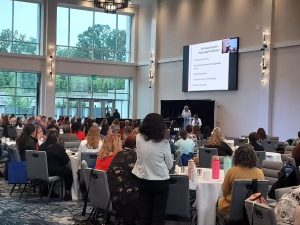
Kara and Alice Brouhard give Keynote Address on Day 2

Our two-day Assistive Technology conference, held on June 9th and 10th at the Bristol Event Center, was a great success with an overwhelmingly positive response! We had almost 250 attendees daily and a wide array of 30 exhibitor tables and 15 dynamic breakout sessions each day.
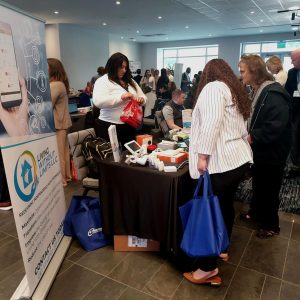
2025 Tech Tools for Life Conference Exhibit hall with attendees visiting the Living without Limits table.

Our keynote speakers, Lynne Seagle on Day 1 and Kara and Alice Brouhard on Day 2 delivered moving insights that left attendees inspired and invigorated.


The Survey Says…
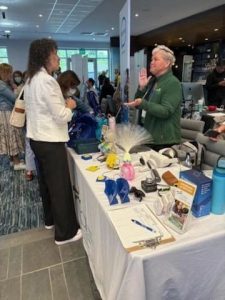
Visiting with UCP of Eastern CT’s exhibitor table.

Our Conference post-survey revealed a clear theme: attendees want more dedicated time for hands-on engagement with the AT devices and more interactive sessions.

About the Sessions:

“All sessions I attended were great! At times wish I could have been in 2 rooms at once.

Kudos for Keynotes:

“The keynote speaker was absolutely amazing!”

“Kara shared her story and a great real-life example of AT in practice.”

From an Exhibitor:

“My overall experience was top-notch.”

Favorite Sessions:

“I loved them all. Can’t possibly choose just one.”

You spoke – we listened!

As a result of the feedback we received, we have been working hard to establish the 2026 Tech Tools for Life, Assistive Tech at its Best: Hands-On Series.

Rather than a full two-day conference in 2026, we are planning a series of hands-on sessions across the state. You can tailor your AT learning experience by choosing sessions that interest you most and will give you the opportunity to engage directly with the latest in Assistive Technology. Dive into topics like Cooking with AT, DIY/Make & Take, Smart Home innovations, Accessible Gaming, Wearable Tech, Cutting-Edge Artificial Intelligence, and more. The Hands-on Series will begin in February 2026 and will run to the end of next year.

More information and details will be hitting your inbox soon. In the meantime, you can visit www.TechToolsforLife.org to find updates on the calendar for the Hands on Series for 2026, including location, registration links, payment information and more.
Tech Tools for Life Assistive Tech at its Best Hands On Series 2026 logo

For a Taste of What’s to Come

The Hands-On Series will kick off on February 12, 2026, from 10am – 2pm with our first session: Hands on… Aprons On: Cooking Without Limits presented by Living without LimitsThis session will accommodate up to 50 attendees who will be cooking with the use of Assistive Technology devices and will be able to enjoy the food as they make it. A modest registration fee of $25 per person will be charged. More info to come soon!

Nigel and James from Living without Limits are Cooking with AT.
Categories
News and Events Product Spotlight

VIRTUAL REALITY DEMO at SCSU

AT Partner agency staff testing out the VR headsets

We had a great turnout for the recent Virtual Reality In-person Demo with Bo Zamfir from SCSU, Center for Educational & Assistive Technology & Matt Berkowitz from FloreoVR. It was wonderful to have so many of our community AT Partners together. The participation, energy, questions and feedback were amazing!

VR Counselors Erin Z and Laura S trying out the Virtual Reality headsets

Virtual Reality is a great way to provide immersive experiences, whether it’s for younger, neurodivergent individuals or teenagers and adults learning training skills, pre-vocational services, or job readiness. The CT Tech Act Project and SCSU/CEAT will work together to have multiple VR headsets along with the FloreoVR and another virtual reality software program called BodySwap available for CT Tech Act Project AT Partner agencies to borrow and use with their students and adults with disabilities, providing greater access to this cutting-edge technology.

Nigel from ATECH volunteers to try the FloreoVR software for the group.

We also plan to work with our AT partners who have 3D printers to create several adaptive cuffs to allow users with varying abilities be able to hold and utilize the controllers.

If you are an individual who is interested in trying a virtual reality headset contact an AT Partner agency near you.


Categories
Announcement News and Events Uncategorized

Register Now for CT’s AT Conference ! May 6 & 7, 2024

Tech Tools for Life Assistive Tech at its Best!

When: May 6th & 7th, 2024

Where: Omni Hotel, New Haven, CT.

Meet, network, learn & share with people advancing independent living through technology.

Register now at the Early Bird rate at this link: https://atechconference.org  and come back often to stay informed on:

  • Conference sessions
  • Speaker Announcements
  • Exhibitors, and
  • Sponsors

ATECH Conference 2024 is sponsored by the CT Tech Act Project & the Connecticut Council on Developmental Disabilities.

Categories
Announcement News and Events

ATIA 2024 – A Fantastic Learning Experience!

Written by Nicole Deary, AT Specialist, EASTCONN

My colleague and I recently attended the Assistive Technology Industry Association (ATIA) conference in Florida, and we are thrilled to share our experience. The event was a treasure trove of information, providing valuable insights into the latest advancements in technology designed to support individuals with communication disorders and other disabilities. The conference showcased a diverse range of products and solutions that left us impressed and excited about the possibilities in our field.

One of the highlights was attending the comprehensive sessions that delved into the practical applications of various assistive technologies. These sessions covered everything from augmentative and alternative communication (AAC) devices to innovative apps and software designed to enhance communication skills. The presenters were experts in their respective fields, offering in-depth knowledge and practical tips that we can now integrate into our practice.

The exhibit hall was a bustling hub of activity, with numerous vendors showcasing their latest products. It was a delight to explore the myriad of options available, each catering to different needs and preferences. From cutting-edge AAC devices with customizable features to user-friendly apps that promote language development, the diversity of assistive technology was truly impressive.

Engaging with the vendors provided us with a hands-on experience, allowing us to better understand each product’s functionality and potential benefits. Additionally, networking with professionals from various disciplines, as well as from our own home state of Connecticut, opened up opportunities for collaboration and knowledge exchange. The vendor exhibit was not only a feast for our mind but also for the taste buds, as attendees were treated to delicious hot pretzels and refreshing ice cream, creating a delightful atmosphere for networking and informal conversations.

Overall, the conference was a fantastic learning experience, and we left feeling invigorated and inspired by the vast potential of assistive technology. The event not only deepened our understanding of the available tools but also reinforced the importance of staying abreast of technological advancements to better serve individuals with communication disorders. We are eager to incorporate our newfound knowledge into our practice and contribute to the continued advancement of assistive technology in our field.

Categories
Announcement ICT Accessibility News and Events

Excellent Resources from the AT3 Center

by Arlene Lugo, Program Director, CTTAP

The National Assistive Technology Act Technical Assistance and Training Center, also known as AT3, offers a wide array of resources on the AT3 Center website.

If you haven’t had a chance to take a look around I encourage you to do so. I’d like to call out two of the newer and very helpful resources:

  1. Free, self-directed Digital Accessibility Courses – three courses are now available with more to come! The courses include: 
    • “Accessibility in Microsoft Word,” 
    • “Web Accessibility Testing: Basic” and 
    • “Accessible Web Design & Content Authoring”

2. Explore AT – “a clearinghouse for information and resources on many different assistive technologies. You can find useful resources arranged by activity and disability.” 

Hope you will take a look around!


Categories
News and Events Resource

Communicating the SAME Message

By Linsey Zanchetti, SCSU Student

My name is Linsey Zanchetti and I am a graduate level student completing my 6th year certification in Assistive Technology at Southern Connecticut State University. This summer, I am completing an independent study with the guidance of Dr. Lauren Tucker, targeting core language approach and modeling with augmentative or alternative communication (AAC) devices for parents and for paraprofessionals. Individuals who are complex communicators may utilize an AAC device in order to improve their functional communication. The success of the introduction and implementation of an AAC system for an individual involves a collaborative teamwork approach (Goldbart & Marshall, 2004; Karlsson, Johnston, & Barket, 2017; Brock, Seamn, & Downing, 2017). This team includes paraprofessionals who are involved in the daily activities of individuals who use AAC devices within the schools and families who are providing natural modeling opportunities within the home. While many parents frequently feel overwhelmed with novel AAC devices, paraprofessionals also experience minimal training which impacts their use of the device within the school setting for school-aged children.

This summer I am planning to conduct two separate training sessions—one for families via Zoom and one for paraprofessionals in person at a special education school in Orange, CT. The focus on the training is to provide a research-based introduction to explain the benefits of using a core language approach with AAC and then explain the best way to model language with an AAC device. Core vocabulary is a set of words consisting of verbs, adjectives, pronouns, articles and conjunctions that make up approximately 80% of what we say. Conversely fringe vocabulary is vocabulary that is specific to an individual or a situation and makes up approximately 20% of what we say. Utilizing a core vocabulary approach helps to allow an individual who uses AAC devices to communicate more efficiently particularly when they are using direct selection to access their device.

Individuals who utilize a multi-modal approach to communicate, including using an AAC device, rarely have the opportunity to see the same modeling when they are beginning to communicate. Modeling intervention strategies have shown significant improvements in the language output for individuals who use AAC devices, however, it is important to identify specific strategies used by various communication partner when developing training programs. Researchers have found that allowing children the opportunity to access and use the device in multiple setting while modeling the use of that device is a key instructional strategy (Campbell, Milbourne, Dugan, & Wilcox 2006; Briggs Carter, & Gilson, 2019). Using communication partners to model the communication through the use of the AAC device is a unique way to allow the communication partner to use the AAC system to model expressive language within natural interactions (Sennott, Light, McNaughton, 2016).

The trainings will provide a brief background on AAC, core vocabulary, and modeling. Participants will then interact to brainstorm communication opportunities within their daily routines. For example, communication temptations will be described and video examples will be provided to promote integration into daily routines. A communication temptation is when an adult sets up the environment to tempt the individual to communicate. For example, during snack time providing only a small amount of the desired snack, requiring them to ask for more. After participants brainstorm opportunities to integrate core vocabulary and communication opportunities, modeling will close the presentations. To facilitate the adoption of modeling, I have created an acronym to help families and paraprofessionals remember key aspects of modeling: SAME (See/Slow, Always, Model, Expand). This simplified model is derived from other approaches in the field (Kent-Walsh & McNaughton, 2009) and redesigned to be more accessible to families. See/Slow emphasizes making sure that the individual is looking at what you are doing when you are modeling with the device. Always focuses on having AAC available all the time and integrating it in an as many opportunities as possible. Model without expectations: making statements, describing things, and restating messages. Finally, expand your model approximately 1-2 words above their use. The goal of SAME is to develop a mnemonic to easily integrate AAC into the home and school routine. Following the Zoom trainings, families and instructional professionals will have the opportunity to attend a follow-up, open-ended training session to answer any questions and to provide ongoing support.

Our goal is to build confidence in families and paraprofessionals to model the language and to help individuals who are complex communicators be exposed to using core language and their AAC devices in all opportunities. We want to build the confidence in order to reduce the abandonment rates for families when introducing AAC devices and to help support the communication partners to be as successful as possible. When school-aged children are introduced to these types of devices, providing adequate training and support to the educators and paraprofessional working with them throughout the school day is vital for the success of the system.